Iowa Teaching Salaries and Benefits

Iowa teacher salary and benefits combine to a median annual salary between $58,420 and $61,200 depending on grade level, according to May 2025 BLS wage data, plus additional value from the Iowa Public Employees’ Retirement System (IPERS) and state health insurance plans. Job growth for Iowa’s teaching occupations is projected around 5% through 2034, outpacing the national trend for every grade band.
Sponsored School(s)


Iowa teachers earn less than the national median at every grade level, but the state makes up ground with a defined-benefit pension administered through IPERS and district-provided health insurance benefits. Looking at Iowa teacher salary and benefits together, rather than pay alone, gives a clearer picture of total compensation. Learn more about becoming a teacher by contacting schools offering teacher education/certification programs in Iowa.
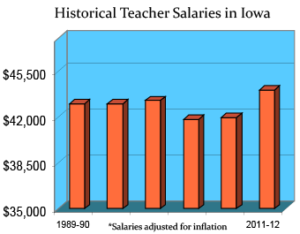
How Much Do Teachers Earn in Iowa?
According to the Bureau of Labor Statistics, Iowa’s median annual wages for teachers range from $58,420 for kindergarten teachers to $61,200 for secondary school teachers as of May 2025. These figures sit below the national median for every grade level, but Iowa’s cost of living is also lower than the national average, which narrows the practical gap.
| Occupation (Iowa) | Median Annual Wage | 75th Percentile |
|---|---|---|
| Kindergarten Teachers | $58,420 | $65,780 |
| Elementary School Teachers | $60,580 | $64,210 |
| Middle School Teachers | $60,450 | $73,900 |
| Secondary School Teachers | $61,200 | $73,970 |
| Occupation (National) | Median Annual Wage |
|---|---|
| Kindergarten Teachers | $62,680 |
| Elementary School Teachers | $63,970 |
| Middle School Teachers | $64,370 |
| Secondary (High) School Teachers | $72,040 |
Pay in Iowa’s public schools also follows a step-and-lane schedule set at the district level, meaning your salary rises with years of experience and additional coursework or advanced degrees, on top of the statewide averages above. Contact your district’s human resources office for its current salary schedule, since figures vary by district and change with each contract cycle.
Iowa’s Job Outlook for Teachers
Iowa’s teacher job market is growing faster than the national trend. The BLS projects Iowa’s teaching occupations to grow roughly 5% between 2024 and 2034, while the national outlook for the same occupations is flat or slightly declining. That growth also means openings for career changers considering alternative certification in Iowa, a faster path into the classroom for candidates who already hold a bachelor’s degree.
| Occupation (Iowa) | Projected Growth (2024-2034) | Avg. Annual Openings |
|---|---|---|
| Kindergarten Teachers | 5% | 180 |
| Elementary School Teachers | 5% | 1,340 |
| Middle School Teachers | 5% | 620 |
| Secondary School Teachers | 4.9% | 950 |
Iowa lawmakers have also pushed to raise the state’s minimum starting teacher salary in recent legislative sessions. Check with the Iowa Department of Education or your district for the current minimum salary floor, since this figure has been a moving target in recent budget cycles.
Retiring in Iowa
Once you’re hired at an Iowa school district, you’re automatically enrolled in the Iowa Public Employees’ Retirement System (IPERS). IPERS covers more than 300,000 public employees statewide, and roughly half of its members are teachers.
IPERS is a defined benefit plan, meaning it pays a lifetime monthly benefit once you retire, rather than a lump sum tied to market performance. You and your employer both contribute a set percentage of your salary each month: as of July 1, 2025, regular members contribute 6.29%, and the school district contributes an additional 9.44%.
You can begin drawing full retirement benefits once you meet one of these qualifications:
- Your age and years of service add up to 88 (“Rule of 88”)
- You’re at least 62 with 20 or more years of service
- You’ve reached age 65
Your monthly benefit is calculated using your final average salary multiplied by a percentage based on years of service. You earn two percentage points for each year of service up to 30 years, then one percentage point per year from year 31 through 35, capping at 65% of your final average salary. For example, a teacher retiring after 27 years with a final average salary of $54,000 would receive roughly $2,430 a month.
For current contribution rates and benefit estimates, visit IPERS’ contribution rates page.
Health Insurance and Other Benefits
Health insurance for Iowa teachers is negotiated and administered at the district level, so plan types, coverage tiers, and costs vary depending on where you work and the terms of your district’s collective bargaining agreement. Some districts offer indemnity-style plans with broader provider choice, while others use managed care or PPO networks that trade some flexibility for lower out-of-pocket costs.
Common coverage across most district plans includes:
- Emergency room care
- Hospital services
- Prescription drug coverage
- Physician office visits
- Routine physicals
- Outpatient mental health care
Dental coverage also varies by district. Some districts negotiate dental benefits as part of their bargaining agreement, which can include:
- Routine checkups
- Restorative services
- Non-surgical and surgical treatments
- Bridges and braces
- Orthodontia
Contact your school district’s human resources office to review the specific health and dental plans available at your workplace, since benefits differ by district and bargaining agreement.
Frequently Asked Questions
What is the average teacher salary in Iowa?
According to May 2025 BLS data, Iowa’s median annual teacher salary ranges from $58,420 for kindergarten teachers to $61,200 for secondary school teachers. Actual pay also depends on your district’s step-and-lane salary schedule, which factors in years of experience and additional education.
How does IPERS retirement work for Iowa teachers?
IPERS is a defined benefit pension plan that pays a lifetime monthly benefit based on your years of service and final average salary. As of July 1, 2025, regular members contribute 6.29% of salary and districts contribute 9.44%, and you become eligible for full benefits under the Rule of 88, at age 62 with 20 years of service, or at age 65.
Do Iowa teachers get health insurance?
Yes, but coverage is negotiated and administered at the district level, so plan types, costs, and dental benefits vary depending on where you teach and your district’s collective bargaining agreement.
Is teaching a growing job in Iowa?
Yes. The BLS projects roughly 5% job growth for Iowa’s teaching occupations between 2024 and 2034, which outpaces the national outlook for the same roles over the same period.
How much do Iowa teachers pay into their pension each month?
As of July 1, 2025, Iowa teachers classified as regular members contribute 6.29% of their salary to IPERS each month, while their school district contributes an additional 9.44% on their behalf.
- Median salaries range from $58,420 to $61,200 — Iowa’s May 2025 BLS wages vary by grade level, with secondary teachers earning the most and kindergarten teachers the least.
- Iowa’s job growth beats the national trend — the state projects about 5% growth for teaching occupations through 2034, while national projections are flat to declining.
- IPERS provides a lifetime pension — as of July 1, 2025, regular members contribute 6.29% of salary, districts contribute 9.44%, and full benefits kick in under the Rule of 88, at 62 with 20 years of service, or at 65.
- Health coverage varies by district — plan types, costs, and dental benefits are negotiated locally through each district’s collective bargaining agreement, so coverage differs depending on where you teach.
Find accredited teacher certification and continuing education programs in Iowa to help you qualify for additional salary lanes and advancement opportunities.

May 2025 US Bureau of Labor Statistics OEWS wage estimates and 2024-2034 employment projections for Kindergarten and Elementary School Teachers, Middle School Teachers, and High School Teachers, reflect state and national data, not school-specific outcomes. State or district job-growth projections are sourced separately from national BLS outlook data. Conditions vary by school sector, subject area, and district. Data accessed July 2026.